

Introduction: Why Solfege Matters
Have you ever wondered how singers hit the right note without a piano or guitar to guide them? Many of them are using a tool called solfege (pronounced "sol-fezh"). It is a system that turns musical notes into simple, singable syllables like do, re, mi.
Learning solfege can help you in a few clear ways.
- You can sing a melody just by reading it, without hearing it first.
- You start to recognize patterns in music instead of memorizing random notes.
- You build a stronger sense of pitch, which helps with singing in tune.
- You understand how music theory connects to the sounds you actually hear.
In this guide, we will break down what solfege actually is, the difference between fixed do and movable do, and how you can practice it using songs you already know. We will also cover why solfege makes sight-singing (singing music at first glance, without ever hearing it) so much easier for beginners.

What Is Solfege, Really?
Solfege gives each note in a musical scale its own short, easy-to-sing sound. The most common set is do, re, mi, fa, sol, la, ti, do. These seven syllables cover a full scale, and the last "do" repeats one octave higher.
Think of solfege like a nickname system for notes. Instead of saying "the third note of the scale," you just say "mi." That is faster to think and easier to sing than a letter name like "E" or "G," because the syllables were built to flow smoothly from your mouth.
You may already know solfege without realizing it. The song "Do-Re-Mi" from The Sound of Music teaches this exact system. Julie Andrews sings each syllable while pointing at the matching note, which is basically a solfege lesson set to music.
Solfege is not just for singers. Music teachers use it to train the ear, and many school music programs use it to teach kids how to read notes before they even touch an instrument. Once the syllables feel natural, reading sheet music stops feeling like decoding a secret code.
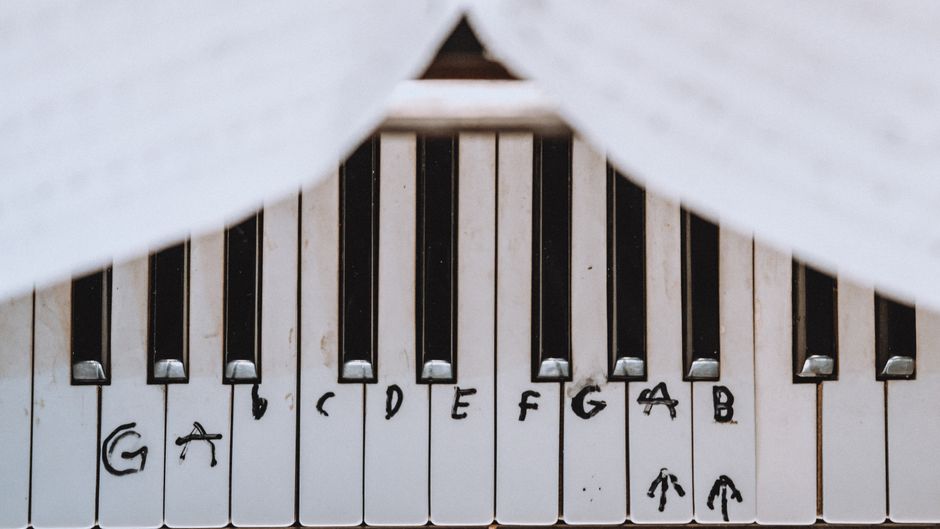
Fixed Do vs Movable Do: What's the Difference?
This is the part that confuses most beginners, so let's slow down. There are two systems for using solfege, and they answer a different question.
Fixed do always ties "do" to the pitch C, no matter what key the song is in. In this system, "do" always sounds the same, like a name tag that never changes. This is common in countries like France and Italy, and it works a lot like calling notes by their letter names.
Movable do ties "do" to whatever note starts the current key. If a song is in the key of C, "do" is C. If a song switches to the key of G, "do" becomes G. The syllables describe the relationship between notes, not one fixed pitch.
Here is a simple way to picture it:
- In fixed do, "do re mi" in the key of C is C-D-E, and in the key of G it becomes "sol la ti," not "do re mi" again.
- In movable do, "do re mi" in the key of C is C-D-E, and in the key of G it is G-A-B. The syllables shift to match the new key, but the pattern of sound stays the same.
Most beginner singers, choirs, and school programs in the United States use movable do. It is easier for training your ear to hear relationships, like the jump between "do" and "sol," no matter what key you are singing in. Fixed do tends to help more with recognizing exact pitches, which is useful for advanced musicians with strong absolute pitch (the ability to name a note just by hearing it, without any reference).