

"Which headphones should I buy for making music?" I get this question almost every week, and the honest answer is a question back: are you mixing, or are you recording? That one answer picks your headphones before the price tag does.
Mixing means you already have the sounds, and you're balancing them. You want headphones that tell you the truth. Tracking means someone is singing or playing while a microphone is open. You want headphones that keep the backing track from leaking into that microphone.
Short version: open-back for mixing, closed-back for recording. If you can only buy one pair and you mostly mix alone, buy open-back.
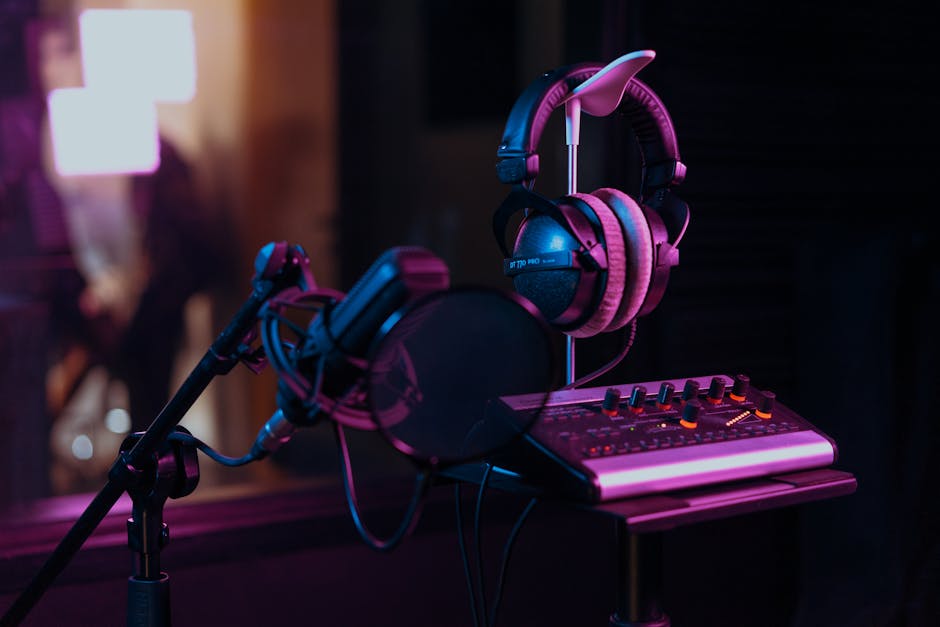
What does open-back actually mean, and why does it matter?
Open-back means the outside of the earcup has holes or a grille. Air moves freely, so the sound doesn't bounce around inside a sealed cup. Closed-back means the cup is solid and sealed against your head.
Here's what that difference does in a real room:
- Open-back: wider, more natural sense of space. Easier to judge reverb and stereo width. But it leaks sound out, and lets room noise in.
- Closed-back: blocks leakage both ways. Bass often sounds bigger than it really is, because the sealed cup traps it.
- Leakage in practice: stand a vocal mic a foot from an open-back headphone at a normal singing volume, and the click track will end up in your take. You'll hear it later and have to re-record.
- Long sessions: open-back cups usually run cooler. Sealed cups get sweaty after an hour.
So the pattern most home studios land on is simple. Open-back lives on the desk for mixing. A cheap closed-back pair lives on the mic stand for recording vocals.
The budget ladder: what about $160 buys, and where to step up
Two wired open-back models got reviewed in the past few days, and they sit at different rungs of the ladder.
The FiiO JadeAudio JT9 is the budget planar option. "Planar magnetic" just means the driver is a thin, flat sheet instead of a small cone, and it usually gives tighter, faster bass. eCoustics reviewed it on October 10, 2026, and that review states the price as $159.99 from Apos Audio — that figure is the one quoted in the review, not a price I checked at a store myself. Prices on gear like this move, so confirm it before you buy.
What you get for that money, per the same review: a wired open-back headphone with no Bluetooth and no noise cancelling, 365 grams on the scale, folding cups with a semi-rigid case, two six-foot cables (one ordinary 3.5 mm, one with a 4.4 mm balanced plug), and a 6.35 mm adapter for a desktop jack. Metal headband, plastic cups. The reviewer flags one real concern in the headline: bright treble, meaning cymbals and "s" sounds can poke out.
That matters for mixing. If treble is pushed up, you'll pull treble out of your mix to compensate, and the mix will sound dull everywhere else. Worth knowing going in.
The Sennheiser HD 550 is the step up for people who mix seriously. RTINGS published its review on October 9, 2026. I want to be straight with you here: that review page doesn't state a price in the part I can cite, so I'm not going to quote one. Check the retailer and treat any number you see elsewhere as today's number, not a fixed one.
Rule of thumb for a first pair: spend the money on open-back for mixing, then buy the cheapest closed-back pair that seals well for tracking. Two decent pairs beat one expensive pair that's wrong for half your work.

Why noise-cancelling flagships fail at mixing
This is the mistake I see most often. Someone owns a nice wireless noise-cancelling pair — Sony's WH-1000 series, a Bose QuietComfort Ultra, something in that class — and figures it's good enough to mix on. It isn't, and the reason isn't snobbery.
Take the Nothing Headphone (1) Pro, reviewed by Andrew Park at Headphones.com on October 11, 2026. He likes plenty about it: comfortable fit, physical buttons, acceptable noise cancelling, and built-in parametric EQ (a tool that lets you turn specific frequencies up or down yourself). He asks for that EQ feature on more products, and he means it.
But the review's verdict is that the EQ can't rescue the acoustics. It uses three drivers — two normal dynamic ones plus a MEMS driver — and he calls that complexity unnecessary on a headphone that's already tuned digitally. The result, per the review: an intense bass boost that makes low notes sound swollen, and a harsh spike around 5 kHz that makes snares and cymbals sound compressed and unpleasant.
The deeper problem is consistency. The review reports the channels don't match well on his head, so that 5 kHz spike can't be reliably notched out — and the response shifts a lot depending on how the headphone sits. He notes Apple and Bose do better here because they use inward-facing microphones to adjust for head shape and placement.
That's exactly why a mixing headphone needs to be boring and repeatable. If the sound changes when you scratch your ear, you can't trust what you hear. Add active noise cancelling, which changes the sound by design, and you're mixing on a moving target.
So who actually needs a headphone amp?
Fewer people than the forums suggest. Here's the test I'd use.
- You don't need one if your headphones hit a comfortable listening level with the knob on your audio interface at around halfway. That's most closed-back tracking headphones.
- You probably do need one if you have to run the knob near maximum and it still feels thin or quiet. Running an output flat out usually means more hiss and squashed dynamics.
- Planars are the common case. Many planar headphones want more power than a cheap laptop jack can give. Note that the JT9 ships with a 4.4 mm balanced cable, per the eCoustics review — FiiO clearly expects some buyers to plug into a proper desktop amp or DAC.
- Buy the headphones first. Live with them for two weeks on whatever you already own. Then decide.
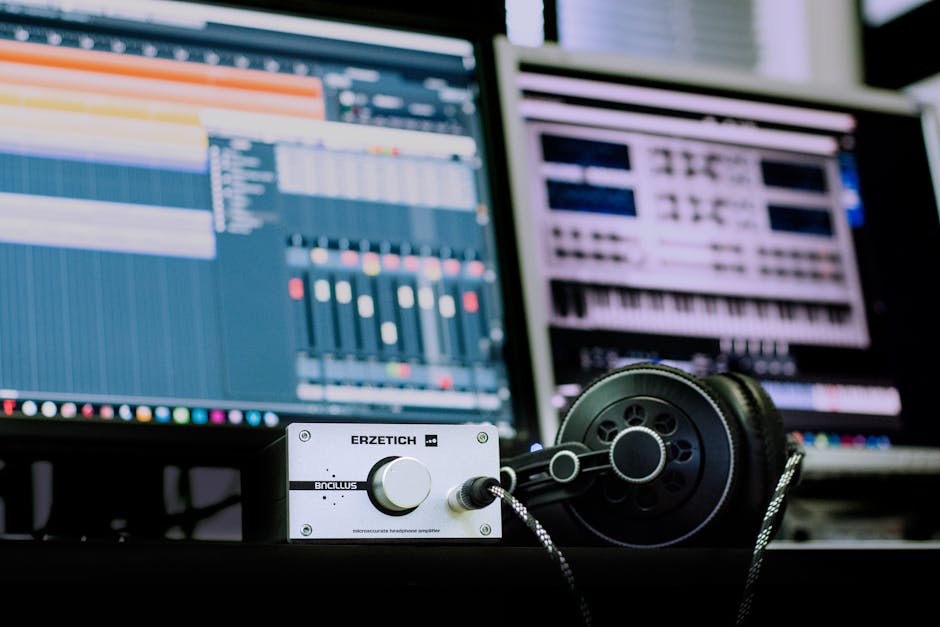
If I were spending my own money this month and I mix in a quiet room, I'd start with one wired open-back pair and skip the amp until the volume knob tells me otherwise. And I'd keep the noise-cancelling pair for the train, which is what it was built for.
This article is for general information only and is not investment, financial, or purchasing advice. Prices, specs and availability change often, so check with the seller or manufacturer before you buy. Any decision and its outcome are your own responsibility.
Related posts
 FiiO FT15 Review: New Planar Headphones vs FT5, Worth $499?새 글이 추천하는 FiiO/JadeAudio JT9와 플래너 매그네틱 방식을 같은 브랜드 상위 모델로 더 깊게 파고드는 리뷰입니다.Read more →
How to Record Vocals at Home in 2026: Best Budget Gear by Price Tier클로즈드백 헤드폰이 필요한 홈 녹음 상황을 마이크·인터페이스까지 가격대별로 이어서 설명합니다.Read more →
Audient Horizon vs Apollo: Which Thunderbolt Interface Fits Your Studio in 2026?헤드폰 앰프가 필요한지 따지다 보면 결국 인터페이스의 헤드폰 출력 성능 선택으로 넘어가게 됩니다.Read more →
Post a Comment