

Introduction: Why Badakhshan's Pamir Music Deserves Your Attention
Have you ever heard a style of music so specific to one valley that almost no one outside it knows the name? That is Pamir music, the sound of Badakhshan — a rugged mountain region split between Tajikistan and Afghanistan, tucked high in the Pamir mountains (a mountain range so remote it is sometimes called "the roof of the world").
A recent profile circulating in world music press puts a spotlight on this tradition, framing it around a musician's exile (being forced to live away from home) and the teahouses where this music has always lived. That story is the reason this piece exists.
- You will learn what makes Pamir music sound different from other Central Asian styles.
- You will learn the names and roles of the main instruments.
- You will learn why teahouses matter as much as concert halls.
- You will get a simple checklist for exploring this music on your own.
In this guide, we will break down the basics of Badakhshan's musical world so you can listen with real context, not just curiosity.
1. What Is Badakhshan, and Why Does Its Music Sound So Different?
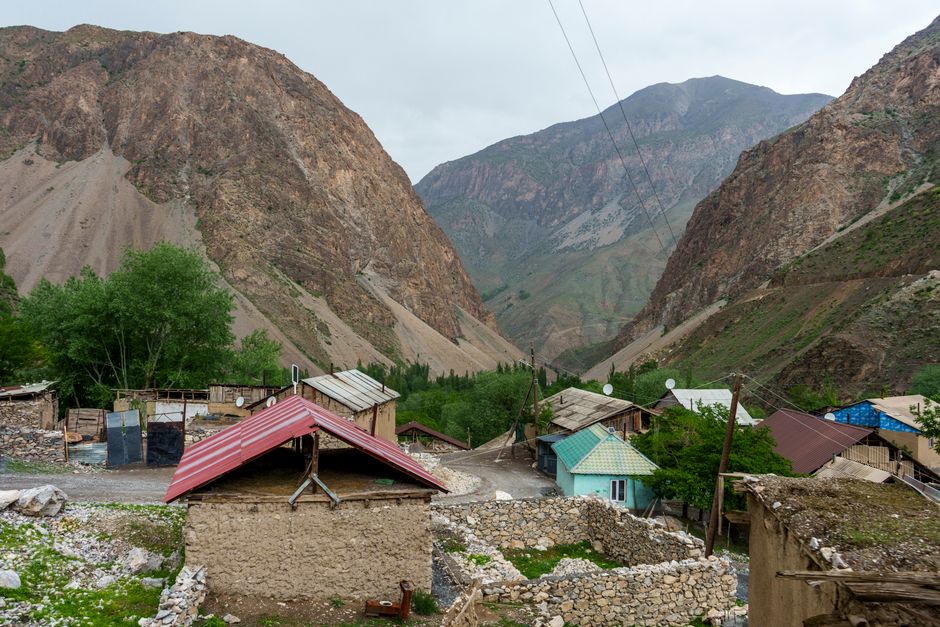
Badakhshan is not one country. It is a mountain region that straddles two: Gorno-Badakhshan (an autonomous province in eastern Tajikistan) and Badakhshan province in northeastern Afghanistan. The terrain is steep, isolated, and historically hard to reach, which matters a lot for music.
When valleys stay cut off from the rest of the world for centuries, local traditions do not get flattened by outside trends. That is a big part of why Pamir music still sounds so distinct today, even as pop music spreads everywhere else through phones and streaming.
The people of this region, often called Pamiris, speak several distinct Pamiri languages, not just Tajik or Dari. Many of their songs are sung in these local languages, which already sets the music apart from mainstream Tajik or Afghan pop.
2. The Instruments That Shape the Pamir Sound
You do not need to read music to appreciate Pamir music. You just need to know what you are hearing. Here are the instruments that show up again and again in this tradition.
- Rubab — a short-necked lute (a stringed instrument plucked like a guitar) carved from a single block of wood, common across Afghanistan and Central Asia.
- Tanbur — a long-necked lute with a deeper, more resonant tone, often used to carry the main melody.
- Ghijak — a bowed spike fiddle (a string instrument played with a bow, built around a vertical spike that goes through the body), which gives Pamir music its wailing, voice-like quality.
- Daf — a large frame drum (a shallow drum stretched over a circular frame) that drives the rhythm, often with jingling metal rings attached inside.
- Setor — a bowed instrument related to the tanbur family, less common but still part of the regional palette.
None of these instruments are electric. None of them need a power outlet. That matters, because it connects directly to where this music is actually played.

3. Falak: The Sound of Longing and Exile
One term you will run into often when reading about Badakhshan is falak, a vocal genre (a style of singing) known for long, stretched-out notes and a mournful, searching tone. The word itself relates to "fate" or "the heavens" in the local language.
Falak songs often deal with separation — from a homeland, from family, from a lover. Historically, that theme came from labor migration: many men from Badakhshan left home for seasonal work, and falak became the soundtrack of missing someone far away.
That is exactly why a story framed around exile fits this tradition so naturally. Exile and longing are not new themes for Pamir musicians. They are close to the emotional center of the genre itself.
4. Why Teahouses Are the Real Concert Halls of Central Asia
Across Central Asia, the chaikhana (teahouse) is not just a place to drink tea. It is a social hub: a place for conversation, storytelling, chess, and, very often, live music.
In Badakhshan, teahouses have served as informal venues for generations. A musician does not need a stage, a sound system, or a ticket booth. They need a room full of people drinking tea and a willingness to listen.
This matters for understanding why Pamir music has stayed so under-covered internationally. It was never built for export. It was built for a specific room, a specific community, and a specific moment of shared listening.
What a Teahouse Performance Usually Looks Like
- A small group, often three to five musicians, rather than a full band.
- No amplification — the room itself does the work.
- Audience members who may already know the songs and sing along.
- A mix of instrumental passages and sung verses, often switching mood from calm to intense.
5. Why Pamir Music Is Finding New Audiences Now
Streaming platforms and world music blogs have made it far easier for a regional tradition to reach listeners who would never otherwise encounter it. A single profile or playlist placement can introduce thousands of people to a sound that used to stay inside one valley.
This is also part of a bigger pattern worth naming: audiences interested in world music are increasingly drawn to styles that feel unfamiliar and specific, rather than generic "world fusion." Badakhshan's music fits that appetite well, because it is tied so closely to one place and one history.
Specific details about the musician featured in the original profile — their current releases, tour plans, or label — can change quickly. If you want the latest on that story, it is worth checking recent coverage directly rather than relying on older summaries.
6. A Simple Checklist for Exploring This Music Yourself
- Search for "falak Tajikistan" or "Pamir music" on a streaming platform to hear the vocal style first.
- Listen for the ghijak's bowed, wailing tone — it is usually the easiest instrument to pick out.
- Pay attention to rhythm shifts from the daf — Pamir pieces often build in intensity rather than staying flat.
- Look for documentaries or field recordings about Gorno-Badakhshan, which often capture teahouse-style performances.
- Compare a falak recording with mainstream Tajik pop to hear just how different the regional sound really is.

Conclusion: A Small Region With a Sound Worth Finding
Badakhshan's music did not grow up trying to reach a global audience. It grew inside teahouses, mountain villages, and stories of people far from home. That is exactly what makes it worth seeking out now.
You do not need to speak a Pamiri language or know music theory to feel what falak is doing. Start with one song, listen for the rubab and the ghijak, and let the rest follow. Overlooked regional traditions like this one reward patience, and Badakhshan is a great place to practice that kind of listening.
This article is for general information only and is not investment, financial, or purchasing advice. Prices, specs and availability change often, so check with the seller or manufacturer before you buy. Any decision and its outcome are your own responsibility.
Related posts
 How to Match Pitch Across Instruments: A Simple Ear Training GuidePamir 음악의 핵심인 루바브·탄부르·기자크 같은 전통 악기 소리를 구분해 듣고 싶은 독자에게, 악기 간 음정을 맞추는 귀 훈련 가이드가 실질적인 다음 단계 학습 글이 됩니다.Read more →
 Angine de Poitrine's Math Rock: How Weird Time Signatures Sell Out Shows서구에 낯선 변박·리듬 구조를 다룬다는 점에서, 바닥샨 포크 음악처럼 익숙하지 않은 박자 구조를 가진 장르에 호기심을 가진 독자층과 겹칩니다.Read more →
FiiO FT15 Review: New Planar Headphones vs FT5, Worth $499?전통 악기의 섬세한 음색(루바브, 다프 드럼 등)을 제대로 감상하고 싶은 월드뮤직 애호가에게 고음질 헤드폰 리뷰가 실질적인 청취 환경 개선 정보로 이어집니다.Read more →
Angine de Poitrine's Math Rock: How Weird Time Signatures Sell Out Shows서구에 낯선 변박·리듬 구조를 다룬다는 점에서, 바닥샨 포크 음악처럼 익숙하지 않은 박자 구조를 가진 장르에 호기심을 가진 독자층과 겹칩니다.Read more →
FiiO FT15 Review: New Planar Headphones vs FT5, Worth $499?전통 악기의 섬세한 음색(루바브, 다프 드럼 등)을 제대로 감상하고 싶은 월드뮤직 애호가에게 고음질 헤드폰 리뷰가 실질적인 청취 환경 개선 정보로 이어집니다.Read more →Image credits
Post a Comment